
A deep clean is a one-off, top-to-bottom clean of a whole home by a team. It covers what a weekly or fortnightly clean leaves alone: inside the cupboards, fridge and microwave, behind the fridge and washing machine, the grout, the limescale on taps and shower screens, and everything above head height. A regular clean keeps a home at a standard, and a deep clean resets it. Ours is always at least two cleaners for at least three hours, from £186.
The table below puts the checklist our deep clean teams work to next to what our regular cleaners do on a weekly visit. Read across a row and you can see where the two differ. The reasons behind the extra jobs come from the NHS, the London Fire Brigade, the Food Standards Agency and the appliance makers.
Deep clean vs regular clean, room by room
| Area | Regular clean (weekly or fortnightly) | Deep clean (one-off) |
|---|---|---|
| Kitchen cupboards and drawers | Not part of the routine. Worktops, splashback, sink and taps are wiped, disinfected and descaled | Emptied, shelves wiped, contents put back tidily |
| Fridge | Front wiped. The inside is an extra you can add | Shelves out and washed, inside wiped, door seals cleaned |
| Hob and extractor | Hob cleaned with the grates lifted, extractor front wiped | Hob taken apart, rings and burners off, grates scrubbed; hood degreased and its filter soaked |
| Behind and under appliances | Not part of the routine | Fridge, dishwasher and washing machine pulled out where possible and the floor behind cleaned; microwave cleaned inside, behind and under |
| Tiles and grout | Bath, shower, screen and tiles scrubbed and descaled | Grout scrubbed with a grout brush; shower screen descaled until it’s clear, tracks and sealant included |
| Toilet | Under the rim, round the base, the cistern and the flush handle | Under the rim, round the hinges and flush, and behind and under the pedestal |
| Dusting | Every flat surface up to the tops of door and picture frames; skirting boards on a rotation | Top down: light fittings, picture rails, cornicing, the tops of wardrobes and doors, cobwebs in the ceiling corners |
| Floors and furniture | Carpets, rugs and hard floors vacuumed, hard floors mopped | Sofas pulled out, rugs lifted, the floor under the beds vacuumed, sofas and chairs vacuumed, every floor mopped with a product that suits it |
| Wardrobes, doors and walls | Not part of the routine | Inside empty or nearly empty wardrobes and drawers; doors, frames and radiators, behind and underneath; wall scuffs taken off where they come off without paint |
| Who comes | One cleaner, the same one each visit where we can, for at least three hours | A team of at least two, each working at least three hours |
Most of the gap is time. One cleaner for three hours a week deals with the dust and bathroom scale of an ordinary week in a two-bed flat. A deep clean puts at least two cleaners in for three hours or more each. That time goes on the jobs in the right-hand column.
The kitchen usually takes the longest
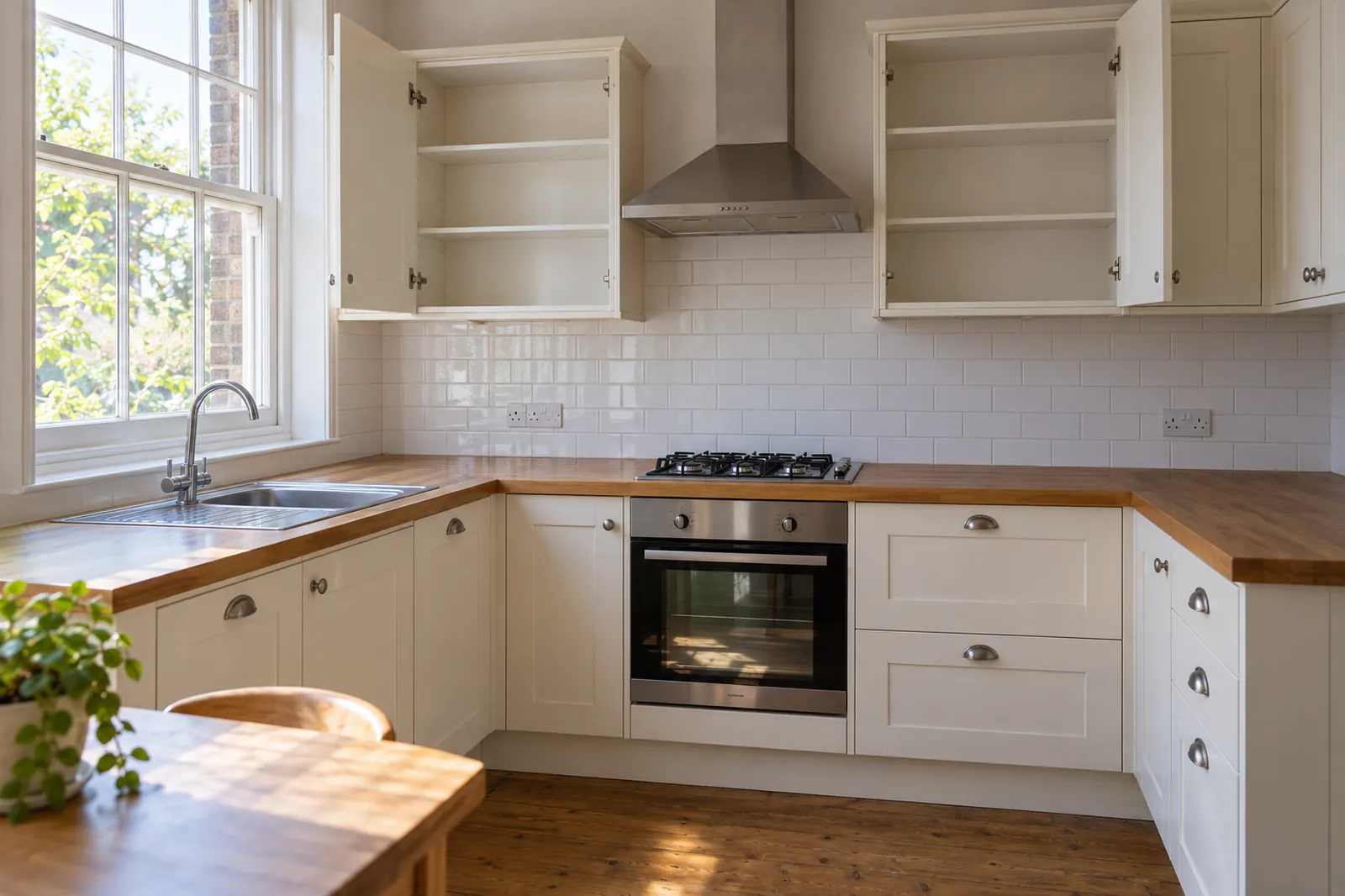
Every cupboard and drawer is emptied, wiped and refilled tidily. The fridge shelves come out to be washed, and the seals get cleaned too, because they collect mould faster than people expect. While the fridge is empty, check its temperature. The Food Standards Agency’s guidance on chilling food says a fridge should run between 0 and 5°C. It recommends a fridge thermometer, checked once a week, and notes that cold slows bacteria without stopping them growing altogether.
The hob comes apart: rings and burners off, grates scrubbed. The extractor hood is degreased and its metal filter soaked. The London Fire Brigade tells households to clean the oven, hob, cooker hood, extractor fan and grill regularly, because built-up fat and grease can catch fire. Doing the filter yourself? The Bosch care guide says to switch the hood off and unplug it first. Then soak a metal grease filter in warm water with a mild detergent for about 10 to 15 minutes. Some can go in the dishwasher if the manual allows it. Bosch adds that recirculating filters can’t be washed at all and need replacing from time to time.
Then the appliances come out. Where they can be moved, the fridge, dishwasher and washing machine are pulled forward and the floor behind them is cleaned. The microwave is done inside, behind and underneath. Tiles, splashback and grout get a grout brush, the sink, taps and drainer are descaled and polished, and the bins and recycling caddy are washed. The oven is a separate booking; our guide to cleaning oven door glass covers the part most people tackle themselves.

Bathroom limescale is left to soak before anyone scrubs
Thames Water says all the water in its region is hard, and hard water leaves a chalky residue called limescale. Our regular cleaners descale London taps every week for that reason. On a deep clean, the descaler goes onto the taps, shower heads, glass and tiles and is left long enough to work. The shower screen is descaled until it’s clear again, tracks and sealant included. Our limescale guide explains the chemistry: limescale dissolves in a mild acid, and the surface underneath decides which acid is safe.
Keep bleach well away from any descaler. UKHSA says sodium hypochlorite, the active part of bleach, gives off chlorine gas when it’s mixed with an acidic product such as vinegar.
Grout is scrubbed as white as it will go. If it has turned black right through, the team tells you, because scrubbing won’t bring it back. Our grout cleaning guide covers what to do with grout that stays dark. The toilet is cleaned under the rim, round the hinges and flush, and behind and under the pedestal, which is where most bathroom smells start.
The extractor fan grille is cleaned as well. In the government’s damp and mould guidance for landlords, blocked or switched-off extractors in kitchens and bathrooms are on the list of things to check in a damp home. The same guidance warns that simply removing surface mould will not stop it coming back.
Bedrooms and living rooms are done from the top down
The team starts high and finishes with the floors, so nothing falls onto a surface that’s already done. Light fittings, picture rails, cornicing and the tops of wardrobes and doors come first, then the cobwebs in the ceiling corners. Sofas are pulled out, rugs lifted and the floor under the beds vacuumed. Internal glass, door frames, the doors themselves and the radiators are wiped, behind and underneath. Wall scuffs come off where they will without taking the paint.
Our deep clean teams bring HEPA vacuums, which suits a home where someone has a dust-mite allergy. For allergic rhinitis, the NHS advises dusting with a damp cloth, using a vacuum with a HEPA filter and washing bedding regularly at 60°C or above.
What a deep clean leaves out
The oven, carpets, upholstery and outside windows each need their own kit, so they’re priced on their own. Book them for the same day and we time everything to finish together; carpets need to dry before the furniture goes back, so the same day suits them. We don’t defrost the freezer. If it’s already defrosted we clean inside it, so defrost it before the team arrives if you want it done. Nothing that needs specialist equipment gets moved, such as a full wardrobe or an upright piano.
A clean won’t mend damage either. Grout stained right through, scuffs that need paint, and mould that keeps returning because of damp are jobs for a tiler, a decorator or whoever looks after the building.
Deep clean prices start at £186
Two cleaners finish most homes in one day. That’s about three hours for a studio or one-bed flat, four to five hours for a three-bed house and five to seven for a four-bed. Our deep clean is £26 per cleaner per hour, with at least two cleaners for three hours, plus £30 for our equipment and detergents. So the smallest job is £186, and two cleaners working four hours each comes to £238. If you’d like the team to use your own products, we drop the £30. If the team arrives and it’s clearly more work than described, they tell you within the first half hour. You then agree a revised estimate or a smaller scope before they carry on.
Regular cleaning is one cleaner by the hour: £23 an hour weekly or £24 fortnightly, with at least three hours a visit, so a weekly visit starts at £69. Plenty of households book a deep clean first to get the place back to a clean start, then keep it there with weekly or fortnightly visits. Where there’s no free parking, we add just what parking costs us.
Questions we get asked
How often should you deep clean your house?
We don’t know of an official interval, and we don’t set one. People book a deep clean before putting a home on the market, after moving in, before a new baby comes home or after a crowded Christmas. If the home will look tired again within three months, book regular cleaning after the deep clean.
Is a deep clean the same as an end of tenancy clean?
No. An end of tenancy clean is for moving out of a rented home. It’s priced by the size of the property, from £156 for a studio to £425 for four bedrooms, and cleaned to the inventory the check-out clerk works from. If the letting agent flags anything within 48 hours, we come back and re-clean it free. A deep clean is for a home you’re living in, moving into or selling.
Can I book just one cleaner for a deep clean?
Not for a deep clean. It’s always at least two cleaners, so the work gets done in one visit. If you’d like one person coming in to keep on top of things, that’s regular cleaning, with the same cleaner each time where we can.
Does a deep clean include carpet cleaning?
Not as part of it. Carpets are an add-on for the same day, at £36 for a bedroom and £43 for a living room.
Sources
- Food Standards Agency (on GOV.UK), How to chill, freeze and defrost food safely
- London Fire Brigade, Cooking safety
- Bosch Home UK, How to clean cooker hood filters
- Thames Water, Hard water
- UKHSA, Sodium hypochlorite: general information, updated 24 April 2025
- GOV.UK (OHID, MHCLG and UKHSA), Understanding and addressing the health risks of damp and mould in the home, updated 1 April 2026
- NHS, Allergic rhinitis, last reviewed 8 January 2026